San Diego, CA — In their first trip to the Western Regional FIRST competition, the robot from Ambler, PA is breaking ground. The Ambler / Wissahickon robot, Miss Daisy, proved to be force to reckon with.
In one of the most exciting sporting events these kids have ever seen, Miss Daisy bloomed advancing through the quarter-finals and onto the semi-finals. The semi-finals looked like they might yank Daisy out by the roots. But, Daisy proved to be a wild flower moving onto the finals.
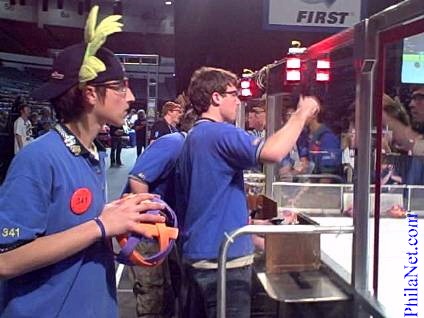
The Miss Daisy Drivers
The finals found Miss Daisy pitted against their new friends, the Holy Cows from High Tech High, San Diego. The Holy Cows were gracious enough to arrange for a night on the town the previous evening. The High Tech High team and parents provided transportation and accommodations in Old City San Diego. By the end of the evening, the two teams became close friends. Today at the pre-qualifying matches and into the playoffs, both teams cheered each other on… up to the finals. In the finals, they found themselves on opposing alliances. That didn’t seem to hurt their fondness for each other. After all, of the 48 teams that started, only 6 made it to the finals. The way a FIRST competition works is that three schools work together on a team to form an alliance. So, in any event, Miss Daisy and the Holy Cows were destined to come in either first or second place.
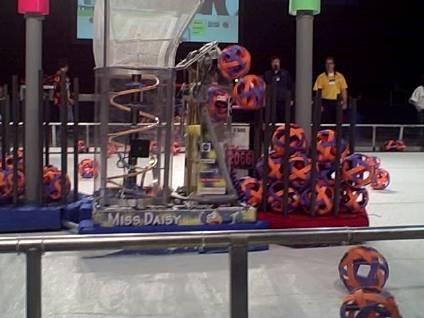
Wissahickon High School, Ambler, PA Miss Daisy Team 341 Robot
The first match of the double elimination competition saw Miss Daisy in the lead. Would the Holy Cows provide the fertilizer needed for Miss Daisy to be victorious or would they eat her for lunch?
The noise and excitement of the audience filled the San Diego Sports Arena like static electricity as round two of the finals got under way. Right before the match got under way you could her the two teams wishing each other luck. That is one of the true beauties of FIRST — they teach the students “gracious professionalism” and that was quite evident today.
The tension mounted into what could be the last match of the tournament. The sound reached a fevered pitch. If Miss Daisy won this round, the show would be over. That is exactly what happened. The Wissahickon High School alliance came in first place. In addition, they took home the Best Website Award and the Judge’s Award. (The Judges’ Award is a special award that the Judges may give to a team that stands out. The Miss Daisy team was noted for having supported the Brazilian team. See Robots Drop Their Bolts and Go Nuts.)
A wonderful ending to the event was the Chairman’s Award. The Chairman’s Award is the most prestigious award bestowed upon a team. At the Western Regional the Chairman’s Award went to Miss Daisy’s new friends, The Holy Cows. It was an exclamation point at the end of splendid event!
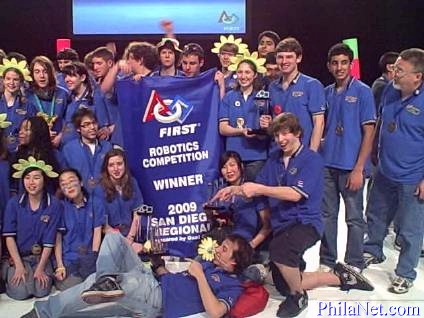
The Wissahickon High School's Victory Flag
The Complete Series
See Humans At Sea World
Lunacy: Robots In Space
The Best Entertainment Value
Robots Take Over the San Diego Sports Arena
Robots Drop Their Bolts & Go Nuts
What Would You Pay?